


6th REGION – DECADES OF DIASPORA LIVING!
As human beings, who we are on all levels, are registered in our DNA. Our Origin and collective memories are stored in our DNA, as we evolve through generations.
What we become is with individual choice, and the circumstances of our living conditions. Life is what you make it. We are spiritual beings, having a physical experience as human beings.
The current realities for people of African origin, are presented through the many lens of the media. Not just contemporary scenarios, but also historical references – positive, negative, true and false.
This overview in decades, highlights some of the major events that have affected the global African population in 70 years, from the 1950s to the present times. We say this, know the Facts, enjoy the Fiction, keep far away from the Factions, there is just too much Frictions.
2020 – 2010
BLACK LIVES MATTER
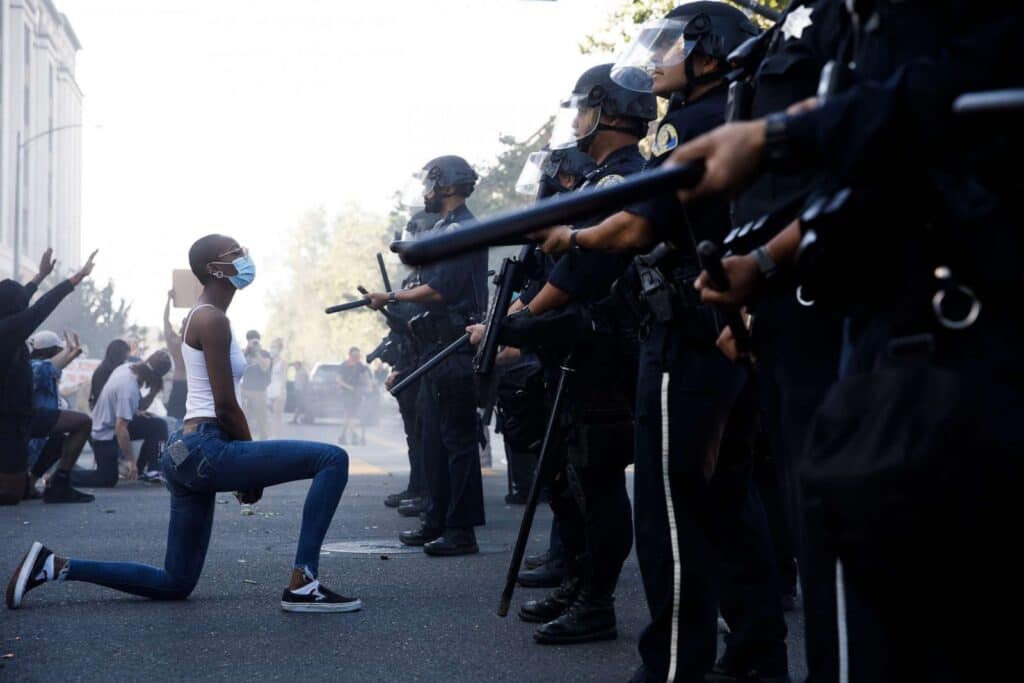
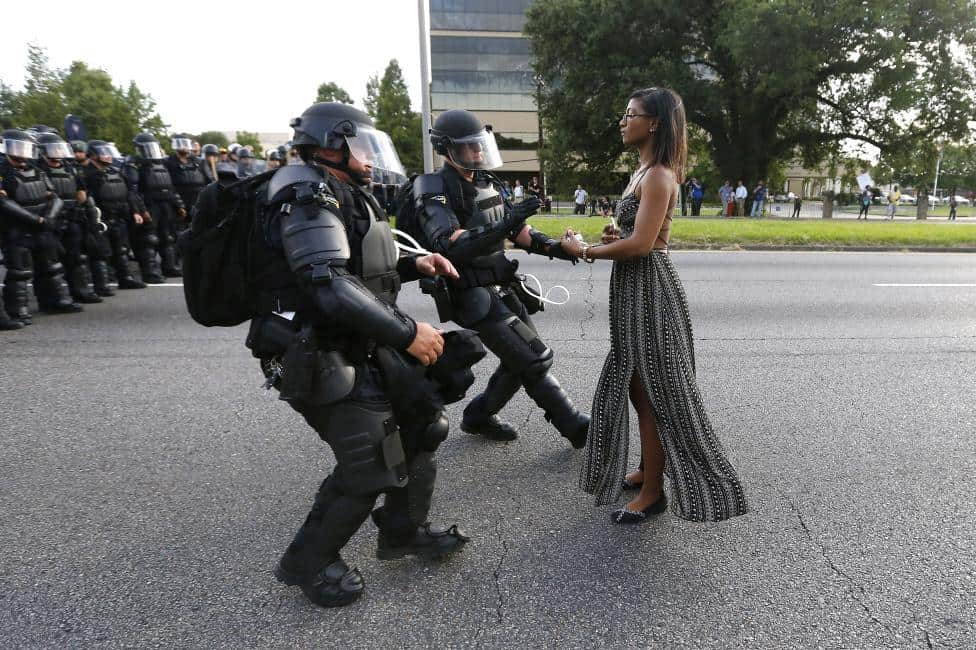
The movement began in response to the killings of Trayvon Martin, Michael Brown, Eric Garner, and Rekia Boyd, among many others. BLM and its related organisations, typically advocate for various policy changes related to black liberation and criminal justice reform.
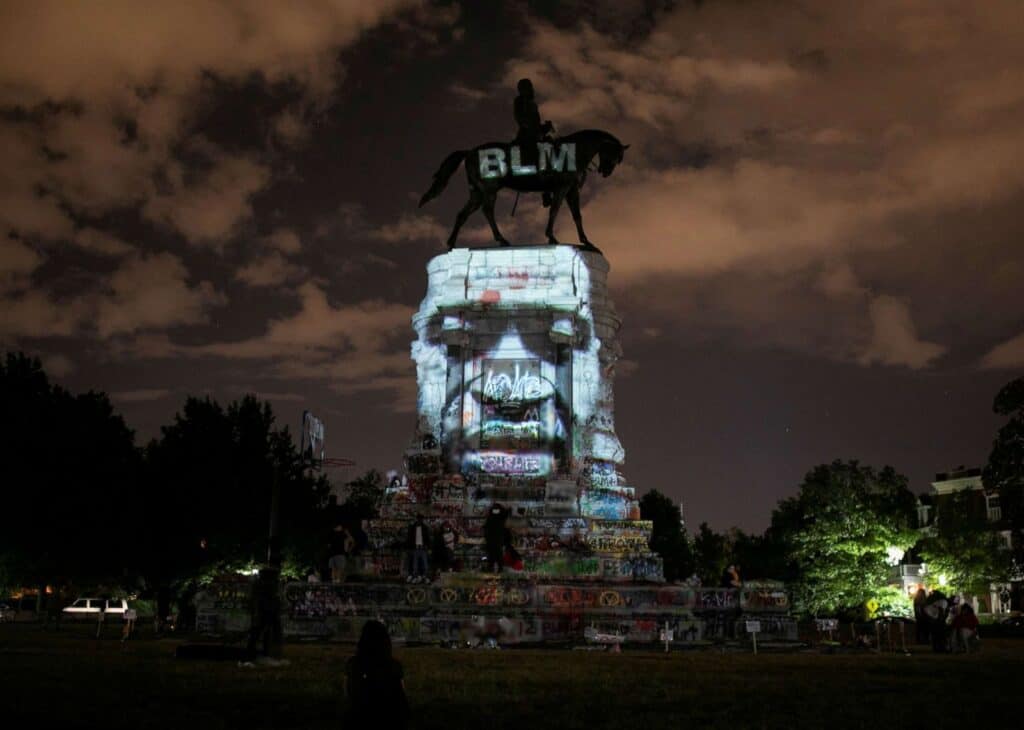
As a way to honour the countless Black individuals who have been injured, attacked, murdered, and impacted by police and vigilante violence, BLM Foundation is declaring July 13th Black Lives Matter Day.
By claiming an official day, we demand a moment of collective silence, remembrance, reflection and commitment to the individuals we lost, their families and our communities.

The recent Black Lives Matter protests peaked on June 6, when half a million people turned out in nearly 550 places across the United States. That was a single day in more than a month of protests that still continue to today.
Four recent polls show between 15 million to 26 million people in the United States, have participated in demonstrations over the death of George Floyd and others in recent weeks. These figures would make the recent protests the largest movement in the country’s history, according to interviews with scholars and crowd-counting experts.
“It looks, for all the world, like these protests are achieving what very few do: setting in motion a period of significant, sustained, and widespread social, political change,” Professor McAdam said. “We appear to be experiencing a social change tipping point — that is as rare in society as it is potentially consequential.”

Black people in the EU face ever More Racism
Equality, Non-Discrimination, Racism, Hate Crime, Racial and Ethnic Origin, Religion, and Belief Montage of various Black people are on the EC current agenda.
Almost half of people of African descent in the EU face racism and discrimination in their daily life – a rise since 2016. Racist harassment and ethnic profiling are also common, especially for young people, according to a new survey from the EU Agency for Fundamental Rights (FRA). FRA calls on EU countries to take urgent steps to tackle racial discrimination and harassment, to ensure everyone is treated equally, and with dignity.
2010 – 2000
From the era of the ‘Numerus Maurorum Aurelianorum’ an African auxiliary unit, in the Roman empire onwards. African realities has been intertwined with Europe’s, America’s and other nations around the world.
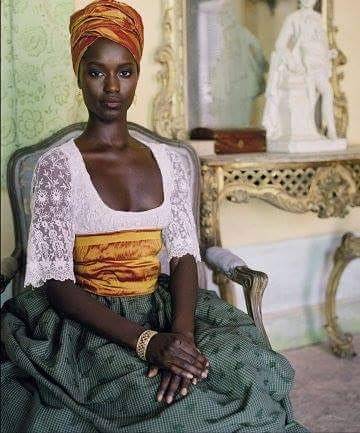


For all of us to understand where we are, and how we got here, it’s clear we need to understand our history. And that must include the contribution of Africans and their descendants to the story of the entire world.
SOCIAL MEDIA


The decade saw the rise of the Internet, which grew from covering 6.7% to 25.7% of the world population. This contributed to globalisation, which allowed faster communication among people around the world
Social Media are interactive technologies, that allow the creation, sharing and aggregation of content, amongst virtual communities and networks. common features include; users to create and share content, and participate in social networking.
Email continued to be popular throughout the decade and began to replace “snail mail” as the primary way of sending letters, and other messages to people in distant locations.
2000 – 1990
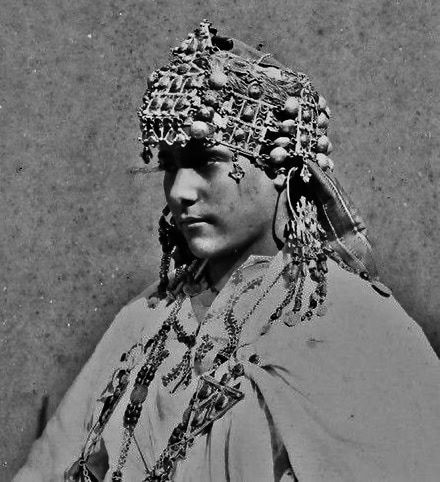
Politics is all about Power and Control. From a Flag and Passport, our National identity is political. The nature of political systems worldwide are now tyrannical, continuing to assert the difference between Big and Small, Powerful and Powerless.
ALGERIA
In 2000 Algeria, North Africa, emerged from the ‘Black Decade’ of the 1990s. The ‘Black Decade’ was characterised by a civil war beginning in 1991 and ending at the beginning of the following decade.
Riots also broke out in the Kabylia region, described as repression and alienation of Algerians, when the native Berber people in the area fought to gain increased recognition of their traditional language and culture.
The riots, known as the ‘Black Spring’, lasted up to 10 days, and where responsible for between 40 and 80 deaths, with some controversy surrounding the validity of the recorded death toll.
During the 2000s Algeria gained increasing involvement and influence in the Organisation of African Unity-OAU.

MILLION MAN MARCH
In October 1995, Black men gathered in Washington, D.C. for the Million Man March. One of the largest demonstrations of its kind in the capital’s history. Its organizer, Minister Louis Farrakhan, had called for “a million sober, disciplined, committed, dedicated, inspired Black men to meet in Washington on a day of atonement.”
The march was intended to bring about a kind of spiritual renewal among Black men, and to offer a sense of solidarity, and of personal responsibility to improve their own condition.
END OF APARTHEID
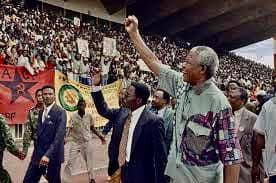
General Elections were held in South Africa between the 26 & 29 April 1994. The elections were the first in which citizens of all races were allowed to vote. Signalling the ‘End of Colonisation’ on the whole Continent of Africa.
Truth & Reconciliation began as a transition program, to multicultural, multiparty democracy. The land was now free, for the benefit of all the people.
“I learned that courage was not the absence of fear, but the triumph over it. The brave man is not he who does not feel afraid, but he who conquers that fear.” …Nelson Mandela.
1990 – 1980
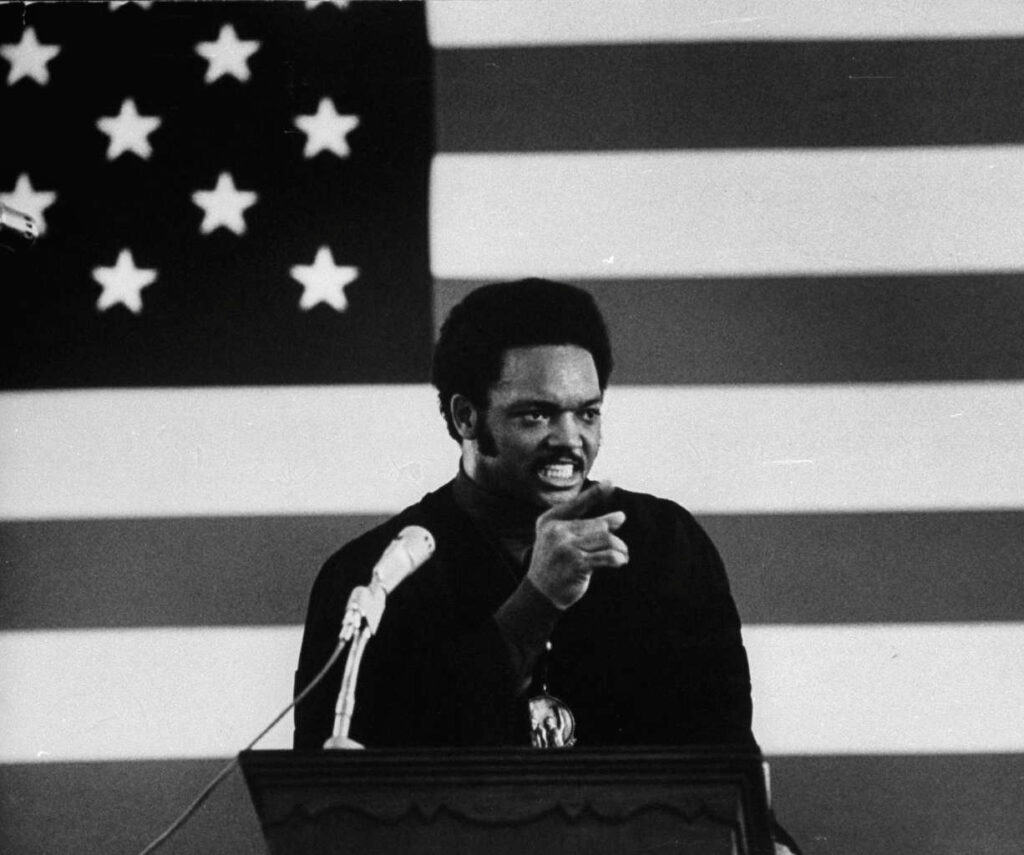
In 1984 and 1988, Jesse Jackson seeks presidential nominations for the Democrat party in America. The two campaigns, although they were not successful, lay the groundwork for Barack Obama to become president two decades later.
Reverend Jackson founded Operation PUSH (People United to Serve Humanity) in Chicago, IL. The goals of Operation PUSH were economic empowerment and expanding educational, business and employment opportunities for the disadvantaged and people of color.
“If my mind can conceive it, and my heart can believe it, I know I can achieve it.”
1980 – 1970

During the 1970s, African American activists made great progress in business, academia and politics. Shirley Crisholm was the first African American candidate in a major party for President, and she was the first woman to run for the Democratic presidential nomination in 1972. Black History Month was founded in 1976 by Professor Carter Woodson.
led by Reverend Jim Jones, in November 1978, Jonestown, Guyana, 909 Americans – members of a San Francisco-based religious group called the Peoples Temple – died after drinking poison.
Jim Jones, was a white minister who preached unconventional socialist and progressive ideas to a predominantly African-American congregation.
1970 – 1960
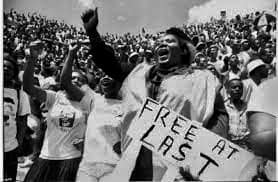
“SAY IT LOUD – I’AM BLACK AND I’AM PROUD!”


l
While the classical Civil Rights Movement took place during the 1960s and the Civil Rights Act was passed in 1964, activists continued to fight for equality throughout the decade. The death of Malcolm X in 1964 and Martin Luther King Jr. in 1968 ushered in a new era of activism.

BLACK POWER
The fists and the fury that shook the world – and inspired generations. Tommie Smith and John Carlos used the Olympic Games podium to protest against racial injustice.
Overnight it became an iconic image. But other parts of the protest were missed, including how both men wore black socks with no shoes to symbolise poverty.
Smith also had a black scarf as a sign of black pride, while Carlos was wearing beads to represent those who had been lynched throughout the American south.
Muhammad Ali, who knew a thing or two about protesting, called what Smith and Carlos did “the single most courageous act of the century”.
1960 – 1950
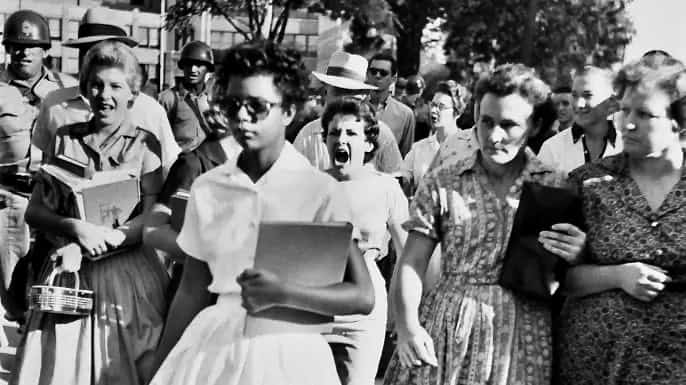
Little Rock Nine
In 1954, the civil rights movement gained momentum when the United States Supreme Court made segregation illegal in public schools in the case of Brown v. Board of Education.
On September 4, 1957, nine Black students, known as the Little Rock Nine, arrived at Central High School to begin classes but were instead met by the Arkansas National Guard (on order of Governor Orval Faubus) and a screaming, threatening mob.
In 1957, Central High School in Little Rock, Arkansas asked for volunteers from all-Black high schools to attend the formerly segregated school. The values of a good education, must be emphasised as most important.

The Little Rock Nine tried again a couple of weeks later and made it inside, but had to be removed for their safety when violence ensued.
Finally, President Dwight D. Eisenhower intervened and ordered federal troops to escort the Little Rock Nine to and from classes at Central High. Still, the students faced continual harassment and prejudice.
The Decolonisation of Africa

From the mid-1950s Colonial governments gave way to sovereign states, in a process often marred by violence, political turmoil, widespread unrest, and organised revolts.
Major events in the decolonisation of Africa included the Mau Mau rebellion, the Algerian War, the Congo Crisis, the Angolan War of Independence, the Zanzibar Revolution, and the events leading to the Nigerian Civil War.
In 1956, Ghana requested independence inside the Commonwealth, which was granted peacefully in 1957 with Kwame Nkrumah as prime minister.
PAC – The Pan-African Congress, gained a reputation as a peacemaker for decolonisation in Africa and in the Caribbean. The First Pan-African Conference was held in London, England, from 23 to 25 July 1900. Organised primarily by the Trinidadian barrister Henry Sylvester Williams, the conference took place in Westminster Town Hall. ACAP Team.